


Download Ebook Chaos: The Science of Predictable Random Motion
Reviewing will certainly not offer you many points. But, checking out will give what you need. Every publication has certain subject as well as lesson to take. It will make everyone wish to select exactly what book they will certainly review. It makes the lesson to take will really associate with just how the individual requires. In this case, the presence of this site will actually assist readers to locate lots of books. So, really, there is not only the Chaos: The Science Of Predictable Random Motion, there are still great deals of type of the books to gather.
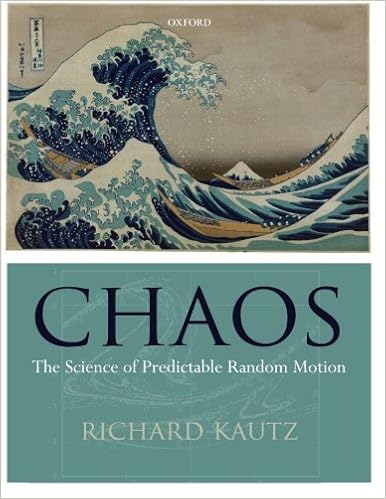
Chaos: The Science of Predictable Random Motion

Download Ebook Chaos: The Science of Predictable Random Motion
The first thing to check out the collection is considering exactly what book to check out. When you are here as well as seeing this internet collection, we will recommend you a number of suggested books for you. The books that is truly ideal with your life as well as duties. Chaos: The Science Of Predictable Random Motion is among the optional book catalogues that can be most desired.
When Chaos: The Science Of Predictable Random Motion is offered you, it's clear that this book is really compatible for you. The soft documents idea of this additionally brings convenience of how you will delight in the book. Of course, taking pleasure in guide can be only done by analysis. Checking out the books will lead you to always understand every word to write and also every sentence to utter. Lots of people occasionally will certainly have different ways to utter their words. However, from the title of this book, we make sure that you have actually known what exactly expect from guide.
Hence, this site offers for you to cover your issue. We show you some referred books Chaos: The Science Of Predictable Random Motion in all types as well as motifs. From usual author to the famous one, they are all covered to supply in this website. This Chaos: The Science Of Predictable Random Motion is you're hunted for publication; you just need to visit the link web page to show in this web site and then go with downloading. It will certainly not take many times to obtain one book Chaos: The Science Of Predictable Random Motion It will rely on your internet connection. Just acquisition and download and install the soft data of this book Chaos: The Science Of Predictable Random Motion
You could save the soft file of this publication Chaos: The Science Of Predictable Random Motion It will depend on your extra time as well as activities to open as well as read this publication Chaos: The Science Of Predictable Random Motion soft file. So, you could not be scared to bring this book Chaos: The Science Of Predictable Random Motion anywhere you go. Simply add this sot file to your gizmo or computer system disk to let you read each time and anywhere you have time.
Review
"Richard Kautz has written an excellent text that is suitable for undergraduates and provides the mathematical detail necessary to give a thorough introduction to chaos. Chaos is a superb book that presents chaos and chaotic systems so that readers will understand the concepts and understand what is so fascinating about this phenomenon." -- by David S. Mazel, The Mathematical Association of America
Read more
About the Author
Richard Kautz is an engineer and physicist who holds a doctorate from the Massachusetts Institute of Technology. During his career at the National Institute of Standards and Technology, he helped develop fundamental quantum standards for both voltage and capacitance. Kautz is a Fellow of the American Physical Society and a recipient of the Samuel Stratton Award for measurement science and the Edward Condon Award for scientific writing.
Read more
Product details
Paperback: 384 pages
Publisher: Oxford University Press; Pap/Cdr edition (December 30, 2010)
Language: English
ISBN-10: 0199594589
ISBN-13: 978-0199594580
Product Dimensions:
9.7 x 0.8 x 7.5 inches
Shipping Weight: 1.9 pounds (View shipping rates and policies)
Average Customer Review:
4.6 out of 5 stars
3 customer reviews
Amazon Best Sellers Rank:
#1,631,492 in Books (See Top 100 in Books)
This is an excellent book. The author systematically introduces the major concepts using simple models (particularly pendulum) and iterations of algebraic equations, visualizations based on these and amplified by interactive media on an accompanying CD. Systems of increasing complexity: 1D, 2D, 3D were pursued. Each step is built on from previous ones and there is useful repetition of previous ideas. This exploration is put into a wonderful historical context . I found these historical vignettes one of the most enjoyable parts of the book and they blended well with the exposition. The evolution of the subject (the motivations, starts and stops) was partitioned naturally within the progressive exposition in the text.I read this shortly after reading An Introduction To Chaotic Dynamical Systems by Robert L. Devaney. The central concepts of the characteristics of chaos: sensitivity to initial conditions; topological transitivity and dense set of periodic orbits were explored and explained in a clear and deep (yet deceptively simple manner). I developed deeper insights into concepts I found difficult: including homoclinic points,, homoclinic trajectories, heteroclinic trajectories. The use of Liapunov exponent was very helpful.Finally, the culmination of potential applications and range of disciplines: Conway's game of life, Wolfram classification of cellular automata, control systems, biomedical science, forecasting was a great way to pull together all the ideas.
"Chaos" records my personal quest to understand the paradox of motion that is predictable and random at the same time. Of course, "random" is usually taken to mean both "unpredictable" and "jumbled", but the paradox remains when we restrict "random" to mean simply "jumbled". How can motion predicted by a simple equation, lacking any random element, be truly jumbled -- all mixed up according to statistical tests? That is the puzzle at the heart of my book.In resolving this puzzle, "Chaos" avoids advanced mathematics (calculus) and relies instead on algebra plus graphics and animation (available on a companion CD) to explore both the phenomenon of chaos and its root cause. If your interest is casual, the introductory chapter probably explains everything you ever wanted to know about chaos. But if you want to glimpse chaos theory's heart of darkness, you'll need persistence and a willingness to absorb new mathematical concepts, including exponentials and logarithms, probability, correlation, frequency analysis, fractals, and transfinite numbers. Each of these concepts is introduced as painlessly as possible with examples and analogies intended to provide an intuitive understanding. In the end, you'll get to know the mathematical monster at the heart of chaos, the topological tangle discovered late in the 19th century by the French physicist and mathematician, Henri Poincaré. Of his tangle, Poincaré wrote, "One is struck by the complexity of this picture, which I do not even attempt to draw."But resolving the paradox of chaos is just part of the story. "Chaos" begins by introducing the science of dynamics, as founded by Galileo and Newton in the 16th and 17th centuries to explain the regular motion of pendulums and planets, motion that epitomizes the predictability of a clockwork universe. Strangely, however, the phenomenon of chaos also falls within the realm of Newton's equations. Although Newton never suspected as much, his equations can give rise to jumbled motion just as easily as periodic motion. But a condition known as "nonlinearity" is required for chaos. In the book, you'll learn about nonlinearity through a series of examples drawn from the motion of a pendulum. Newton himself butted heads with nonlinearity when he tried to understand the details of the moon's orbit and later admitted that it made his head ache.Using Newtonian dynamics, my book explores the chaotic motion of a pendulum to reveal exactly how jumbled it can be. When a pendulum is driven by a periodic force of sufficient strength, its motion doesn't necessarily settle into the regular swing of a grandfather clock. Instead, its rotation can be completely jumbled, without any apparent correlation between how it's rotating now and how it was rotating some time ago. Indeed, tracking the pendulum's net rotation reveals a drunkard's walk, with forward motion accumulated with the same probability as reverse motion. And, if we pretend the pendulum's velocity waveform is an audio signal, chaos sounds like white noise: the hiss of a radio tuned between stations. These are surprising observations given that the pendulum's motion is predicted by a simple equation, lacking any hint of randomness.A further property of chaotic motion is colorfully described as the "butterfly effect". This effect was discovered by Edward Lorenz, the meteorologist who first realized that weather can be chaotic. In 1959, while exploring a simple mathematical model that predicted nonperiodic weather patterns, Lorenz discovered that a tiny disturbance can quickly lead to a pattern completely different from what would have occurred without the disturbance. This observation led Lorenz to ask, "Does the flap of a butterfly's wings in Brazil set off a tornado in Texas?" My book explores this sensitivity of chaotic systems to small disturbances in a variety of scenarios, from convecting fluids to whirling carnival rides to colliding billiard balls. In each case, the butterfly effect profoundly limits our practical ability to predict the future, even when exact prediction is possible in principle.In addition to presenting the phenomenon of chaos and its ultimate mathematical roots, Chaos traces its historical development from Galileo and Newton, who began the science of dynamics, to Poincaré, Hadamard, and Birkoff, who developed the underlying mathematics of chaos, to Lorenz, Smale, and others, who initiated the coming of age of chaos. Biographical sketches of the founding fathers of chaos theory enliven the narrative and explain the historical context of their work.Although "Chaos" is perhaps best suited to college undergraduates, it is also intended to be accessible to high-school students. With this in mind, I am pleased to report that the British Physics Olympiad presented "Chaos" as a prize to outstanding participants in its 2012 high-school competition. I am also pleased to offer the following accolades drawn from unsolicited reviews of "Chaos"."... Kautz has written an excellent text that is suitable for undergraduates and provides the mathematical detail necessary to give a thorough introduction to chaos. Chaos is a superb book that presents chaos and chaotic systems so that readers will understand the concepts and understand what is so exciting about this phenomenon. ... I highly recommend this book." -- David Mazel, MAA Reviews (October 2012)"Kautz's [Chaos] functions at the level of Ruelle's [Chance and Chaos] but is more focused and complete. It brings a thorough and fresh approach to the task. The writing is lucid and very engaging ... and the illustrations are uniformly excellent." -- James Blackburn, American Journal of Physics (September 2012)"The book is a famous introduction into the wide field of chaos and provides a very good basis for further studies. It is very useful for ... students in engineering, natural sciences, and mathematics or people interested in a better understanding of the nature of chaos. It is highly recommended." -- Bernd Platzer, Journal of Applied Mathematics and Mechanics (May 2012)"This is altogether a brilliantly written book that reflects the huge dedication and passion of the author to explaining the phenomenon of chaos. I can highly recommend this work to any reader who wishes to understand fundamental concepts and ideas of chaos without the need to employ any advanced mathematical formalism." -- Rainer Klages, Journal of Statistical Physics (July 2011)"[Chaos] could serve as the basis for a college-level general science course as well as a resource for curious nonscientists. Kautz writes well, provides easy-to-follow explanations, and includes historical context through biographical sketches." -- Eric Kincanon, Choice Reviews (July 2011)
Initially received the book and did a quick skim of the chapters. "Chaos" is a complex topic and this book will help clarify the concept/theory.
Chaos: The Science of Predictable Random Motion PDF
Chaos: The Science of Predictable Random Motion EPub
Chaos: The Science of Predictable Random Motion Doc
Chaos: The Science of Predictable Random Motion iBooks
Chaos: The Science of Predictable Random Motion rtf
Chaos: The Science of Predictable Random Motion Mobipocket
Chaos: The Science of Predictable Random Motion Kindle
0 komentar:
Posting Komentar